o
o
g
l
e
★★★★★
5.0 (64 Reviews)
Google Guaranteed
Can I Trademark My Business Name If Someone Else Is Already Using It?
Nationwide brand protection for ambitious founders, direct-to-consumer innovators, and growing enterprises. Led directly by attorney Nuzayra Haque-Shah.
Maybe. U.S. trademark rights go to whoever uses a name in commerce first, not whoever files first. If another business used a similar name for similar goods or services before you did, they likely have priority, even without a registration. If they’re in a different industry, a different region, or their use was minor, you may still be able to register. A clearance search on your specific name and classes gives you a real answer.
Why this Matters
Founders usually find out about a name conflict backwards, after the logo, the website, and the launch spend. By then, a cease-and-desist letter costs far more than a search would have.
If the other business has priority, you can be forced to rebrand mid-growth: new name, new domain, new packaging, new ad spend, starting over on brand recognition. It’s the single most common reason a founder ends up in our office.
The flip side matters too. Sometimes the “someone else” is a small, local user with no federal registration and no real claim outside their town, and you can still register nationally and build around them.
What counts as “already using it” under trademark law?
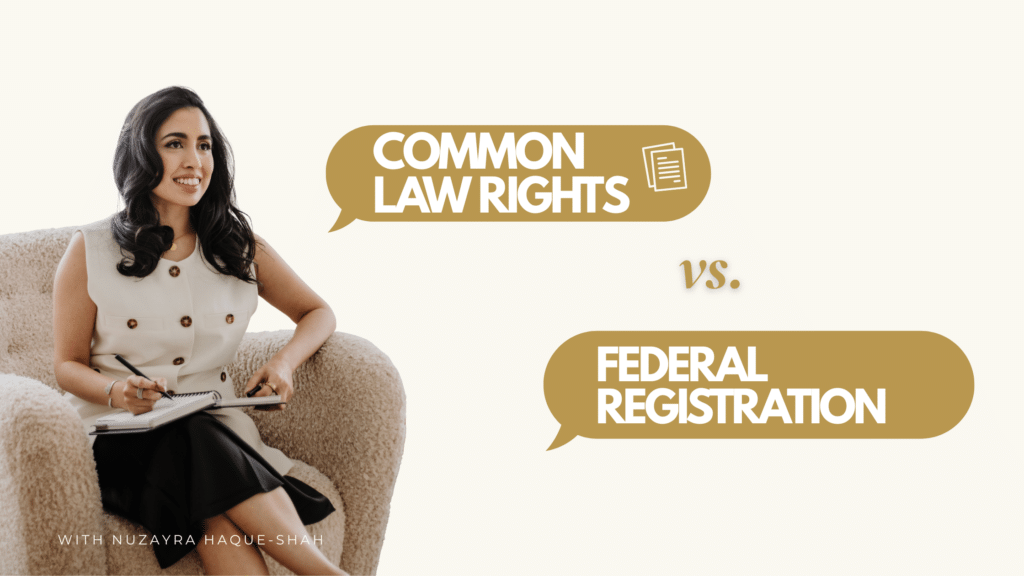
In the U.S., trademark rights come from use in commerce, not from registration. If a business has been selling under a name, even without ever filing anything with the USPTO, it holds what’s called a common law trademark. That gives it priority over anyone who starts using a similar name later, for similar goods or services, in the area where it actually operates.
Registration with the USPTO doesn’t create the right; it confirms and expands it nationwide. So “already using it” can mean a competitor with a federal registration, or it can mean a shop three towns over that’s never filed anything but has been open for five years.
Does a federal registration always win?
A federal registration gives the strongest, broadest protection: nationwide rights, a legal presumption of ownership, and the ability to stop later users everywhere, not just where they’ve actually sold something. But filing after someone else’s earlier common law use doesn’t erase that earlier use. A senior user can petition to cancel a registration that was granted over their prior rights.
If neither business has registered, priority usually goes to whoever used the name in commerce first, which is why dated proof matters: invoices, ads, a launch date, a domain registration, anything that proves when you actually started.
What if they’re in a different industry or a different state?
Trademark rights aren’t absolute. They’re tied to specific goods and services, organized into 45 USPTO classes, and, for unregistered users, to a specific geographic area. A bakery called Wildflower in Ohio doesn’t automatically block a skincare brand called Wildflower in California: different goods, different markets, likely no conflict.
The USPTO’s actual test is “likelihood of confusion”: would a customer reasonably think the two brands are related? Examiners weigh how similar the names sound and look, how related the goods or services are, and where each brand sells. Two clothing brands with similar names get scrutinized far harder than a law firm and a bakery.
How do I find out if a name is already taken before I use it?
A basic search on the USPTO’s Trademark Search database only shows federally registered and pending marks. It won’t surface common law users, state trademark registrations, or businesses that never filed. A real clearance search covers all three: the federal register, state registrations, and common law use across business directories, social handles, domain registrations, and industry publications.
Most founders discover a conflict months after launch, from a five-minute Google search instead of a proper clearance search done before spending on branding. A clearance search plus federal filing, [from $899, VERIFY current pricing], tells you where you stand before you’ve built anything you’d have to give up.
What happens if I file and someone objects?
If the USPTO finds a similar mark already registered or pending for related goods, it issues a Section 2(d) office action, a refusal you have to respond to with legal argument. You get three months to respond, with one optional three-month extension for a $125 fee; miss both, and the application goes abandoned.
If your application clears examination and publishes, any business that believes it’s harmed can file an opposition at the Trademark Trial and Appeal Board (TTAB) before your registration issues. Both an office action and an opposition are winnable, but they take longer and cost more than getting the name right before you file.
What to do next
- Run a full clearance search on the exact name and your actual goods or services, not just a Google search.
- Note who’s using anything similar, in what class, in what geography, and since when.
- If there’s a real conflict in your classes, consider a variation, a narrower class scope, or a new name before you spend on branding.
- If the field is clear, file with the USPTO under the right class or classes, using the correct filing basis (use in commerce vs. intent to use).
- Keep dated proof of your own first use: invoices, ads, screenshots, launch announcements.
- If you get an office action or opposition, respond within the deadline. Don’t let the application go abandoned by missing it.
A name you already love isn’t worth building a business you might have to abandon later. A clearance search costs far less than a rebrand, and it tells you exactly where you stand before you spend another dollar on the brand. Book a consultation and find out if the name is actually yours to keep.
Frequently Asked Questions
Can I still use my business name if I can’t trademark it?
Often yes, at least locally. You can usually keep operating under a name you can’t register federally, as long as you’re not infringing someone else’s existing rights in your market. But you won’t get nationwide protection, and a later dispute could still force a change.
What if the other business never registered their trademark?
They may still hold common law rights in their area, which can block your federal registration or limit where you can use the name, even without a USPTO filing.
Does trademarking a name mean no one else can ever use it?
No. Trademark rights are tied to specific goods, services, and often geography. Unrelated businesses in unrelated industries can often use the same word without conflict.
Is filing an “intent to use” application before I launch a good idea?
Often yes. It reserves your place in line with the USPTO based on a genuine intent to use the mark, before you’ve made a single sale. You’ll still need to show actual use before registration issues.
What if I already spent money on branding before checking?
Stop before spending more. Run the clearance search now. If there’s a real conflict, a small pivot early is far cheaper than a forced rebrand after launch.
Related questions founders ask